The night before a pest control visit is usually when people realize how much stuff collects along baseboards, under sinks, and around the garage door. If you are wondering how to prepare house for pest control, the good news is that you do not need to turn your home upside down. A little prep goes a long way, and it helps your technician treat the right areas safely, thoroughly, and without delay.
Good preparation does two things. First, it gives your pest control pro access to the places where pests actually hide, travel, and nest. Second, it helps protect your family, pets, and belongings while treatment is being completed. Whether you are dealing with ants in the kitchen, spiders in the basement, mice in the garage, or wasps around the eaves, the basics are similar, but a few details depend on the pest and the type of service.
Why prep matters before treatment
Pest control is not just about spraying and hoping for the best. The best results come from a combination of the right product, the right placement, and a home that is ready for treatment. If your technician cannot reach baseboards, access points, utility areas, or problem spots, the service may be less effective than it should be.
Preparation also helps reduce repeat issues. For example, if crumbs stay under the stove, if pet food is left out overnight, or if boxes are stacked against garage walls, pests still have food and cover even after treatment. In other words, treatment handles the active problem, and prep helps remove what attracted it in the first place.
How to prepare house for pest control indoors
Start with the areas where you have actually seen activity. That might be the pantry, the mudroom, the basement storage area, or the bathroom. You do not need to deep-clean every inch of the house, but you should make the problem areas easy to inspect and treat.
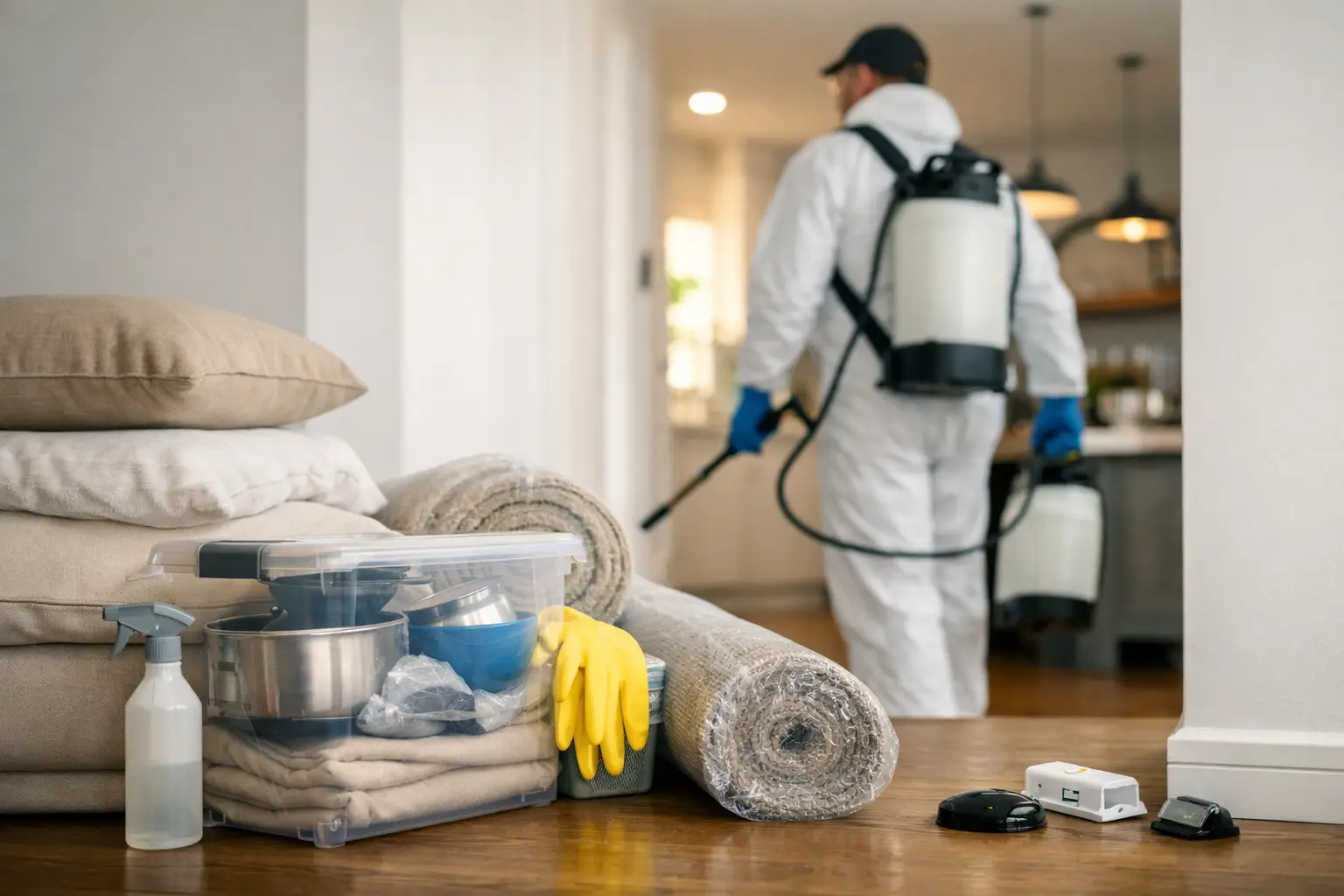
Move small furniture, storage bins, pet bowls, and floor clutter a few feet away from the walls if possible. This is especially helpful in kitchens, bathrooms, laundry rooms, utility rooms, and garages. Baseboards, corners, and plumbing entry points are common pest highways, and clear access matters.
In the kitchen, wipe down counters, sweep the floor, and store exposed food in sealed containers. It is smart to clear out under the sink and tidy the pantry if ants, roaches, or silverfish are the issue. You usually do not need to empty every cabinet unless your pest control company specifically asks you to, but removing loose paper goods and obvious food sources helps.
In bathrooms and laundry rooms, pick up rugs, baskets, and anything sitting around plumbing lines. Many pests are drawn to moisture, so this gives your technician a better view of leaks, damp corners, and entry points.
For bedrooms and living spaces, focus on floor-level access. Pick up clothing, toys, and piles of paper from along the walls. If bed bugs are the concern, prep is much more specific and usually more involved, so always follow the technician’s exact instructions.
Protecting pets, kids, and everyday items
Families in Utah often ask the same practical question: do we need to leave the house? The answer depends on the treatment being used and where it is being applied. Many routine treatments are designed with residential safety in mind, but you should still follow the instructions your technician gives you.
Before the appointment, put away pet dishes, toys, and bedding from areas being treated. Cover or store children’s toys that sit on the floor. If fish tanks or reptile enclosures are nearby, mention them before service so the technician can advise you on the safest next step.
It is also a good idea to store toothbrushes, medications, and exposed food items in closed cabinets or drawers. If treatment is happening in a pantry or under sinks, remove anything directly in the application area. That is less about panic and more about common-sense housekeeping before service.
If you have dogs in the backyard or cats that like to slip out the door, make a plan before the technician arrives. Secure pets in a separate room, crate, or fenced area that will not be treated during the visit. That keeps everyone safer and makes the appointment go more smoothly.
Outdoor prep makes a big difference too
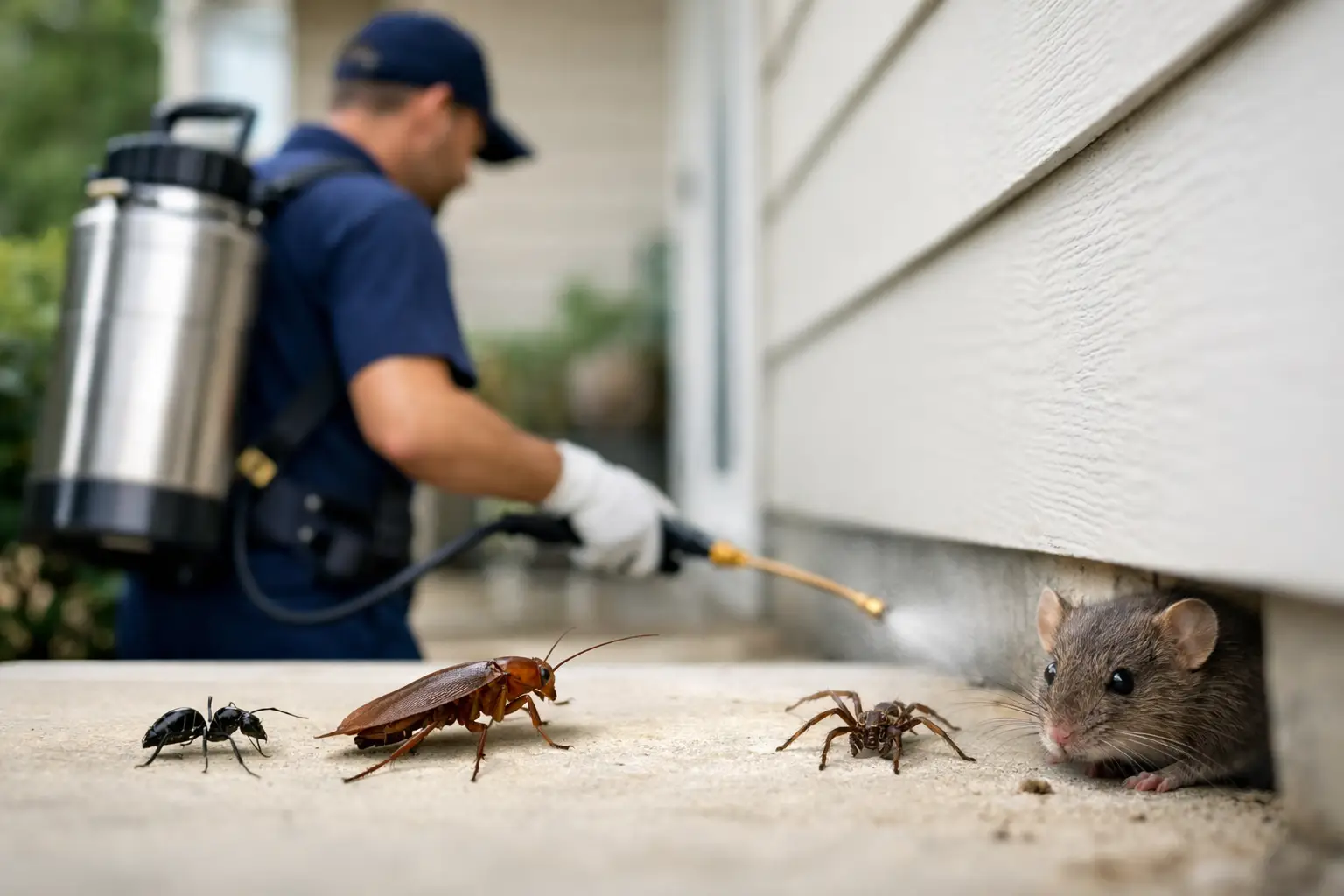
A lot of pest issues start outside. Spiders, ants, wasps, mice, voles, and other nuisance pests often move in from the yard, foundation, fence line, or garage perimeter. That is why outdoor preparation is just as important as indoor cleanup.
Mow or trim heavy grass if it is blocking access around the home. Cut back plants, shrubs, and tree branches that touch the siding, windows, or roofline. Pests use that contact like a bridge into your house, and overgrown landscaping also gives them cool, protected hiding spots.
Pick up pet waste, yard toys, and loose debris from treatment areas. Move potted plants, stacked wood, and storage items away from the foundation if you can. If your technician is treating for gophers, voles, wasps, or mosquitoes, be ready to point out exactly where you have seen the activity.
Standing water is another big one, especially in warmer months. Empty buckets, kiddie pools, clogged trays, and anything else holding water. Mosquitoes do not need much to breed, and reducing water sources helps treatment last longer.
Common prep mistakes homeowners make
One mistake is overdoing it. You do not usually need to bag up your whole house or scrub every surface with harsh cleaners right before a treatment. In fact, if you mop baseboards or wash treated surfaces too soon afterward, you may reduce how well the service works.
Another mistake is forgetting the garage, utility room, or exterior. These are some of the most common problem areas for spiders, mice, earwigs, ants, and other pests in Utah homes. People tend to focus on the kitchen and ignore the exact place pests are entering.
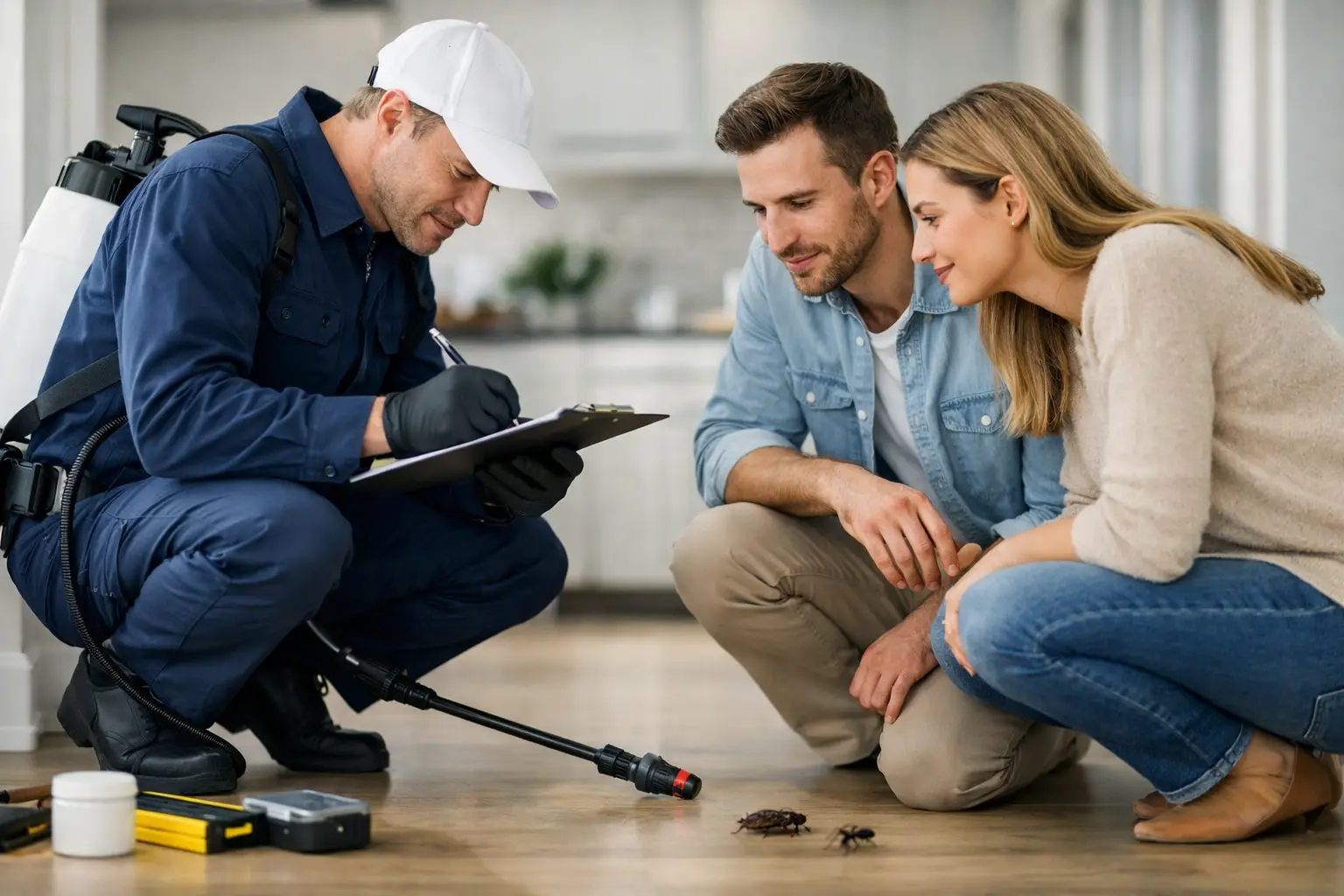
The last common issue is not mentioning what you are actually seeing. If you tell your technician that you have “some bugs” but forget to mention the wasp nest above the back patio or the scratching sound near the attic access, important details can be missed. A quick, honest rundown helps your technician treat more accurately.
Pest-specific prep can vary
Not every service visit is the same. If you are preparing for general pest control, the steps are usually simple: clear access, put away food, secure pets, and tidy up problem areas. If you are dealing with rodents, your technician may ask you to reduce clutter in garages, storage rooms, or crawlspace access points.
For flea treatments, there may be more prep involved, including vacuuming floors and washing pet bedding. For wasps and hornets, the main thing is making sure outdoor access is clear and letting the technician know where the nest activity is highest. For mosquito service, expect a stronger focus on landscaping and standing water.
That is why local service matters. A technician who regularly works in Salt Lake County, Davis County, Tooele County, or St. George will already be familiar with the seasonal pest patterns here and can tell you what matters most for your specific issue.
What to ask before your appointment
If you want the visit to go smoothly, ask a few simple questions when you schedule. Find out whether you need to leave the home, how long pets and kids should stay away from treated areas, and whether any cabinets or storage spaces need to be emptied.
You should also ask what not to do after treatment. Sometimes homeowners accidentally interfere with the results by cleaning too aggressively, watering too soon outdoors, or moving bait stations. Clear instructions upfront save time and frustration.
At Weed and Pest Control Specialist, this is the kind of practical guidance we believe customers should get before service, not after a problem pops up.
After prep, let the treatment do its job
Once your home is ready, the best thing you can do is let your technician work and follow the aftercare instructions closely. Some pests improve quickly, while others take a little time because of breeding cycles, hidden nests, or weather conditions. That does not always mean the treatment failed. Sometimes it means the process is working the way it should.
A well-prepared home gives pest control a better shot at lasting results. It also makes the visit easier, faster, and less stressful for everyone involved. If you are not sure how much prep is really needed, ask before your appointment. A good local company will tell you exactly what matters, skip the unnecessary fuss, and help you feel ready before they ever knock on the door.
A little preparation now can mean fewer pests, fewer callbacks, and a home that feels a whole lot more comfortable afterward.