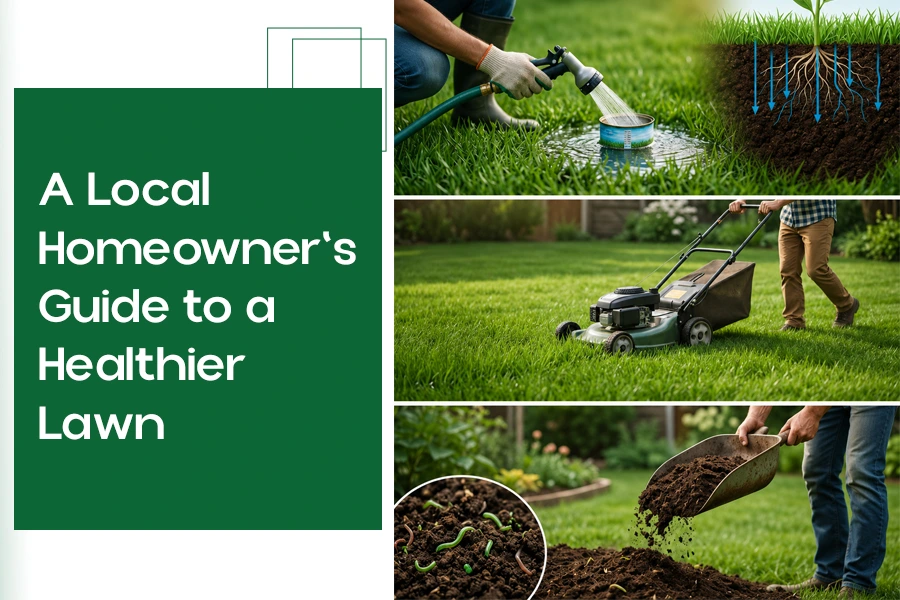
There’s a specific kind of frustration that comes with watching your lawn fall apart and not knowing why. The grass thins out in patches. Something’s chewing through the roots. You see holes, dead rings, or trails of damage that weren’t there last month. So you search “lawn pest control near me” and hope somebody local can actually explain what’s going on.
We work lawns across West Jordan, Salt Lake County, Tooele County, Davis County, and out toward St. George. And the calls we get aren’t usually about one obvious thing. They’re about damage that showed up quietly, got worse slowly, and now it’s bad enough that the homeowner is done guessing.
This guide covers which pests actually destroy Utah lawns, how to tell the difference between pest damage and other problems, and what real professional pest control looks like from the first visit onward. No fluff, just the stuff that actually helps.
The Problem With Most Lawn Pest Searches
Here’s something worth knowing before you start calling around. “Lawn pest control” means different things to different companies. Some focus entirely on insects. Some mix in rodent control. Others bundle everything, grubs, surface insects, gophers, even lawn disease, under one umbrella. And some companies use the same general treatment plan on every lawn regardless of what’s actually causing the problem.
That last part is where homeowners lose money. Treating for grubs when your damage is actually from sod webworms is like taking allergy medicine for a broken arm. It does nothing. Knowing what pest you’re actually dealing with isn’t just useful, it’s the whole job.
Which brings us to identification.
Pests That Cause Real Damage in Utah Lawns
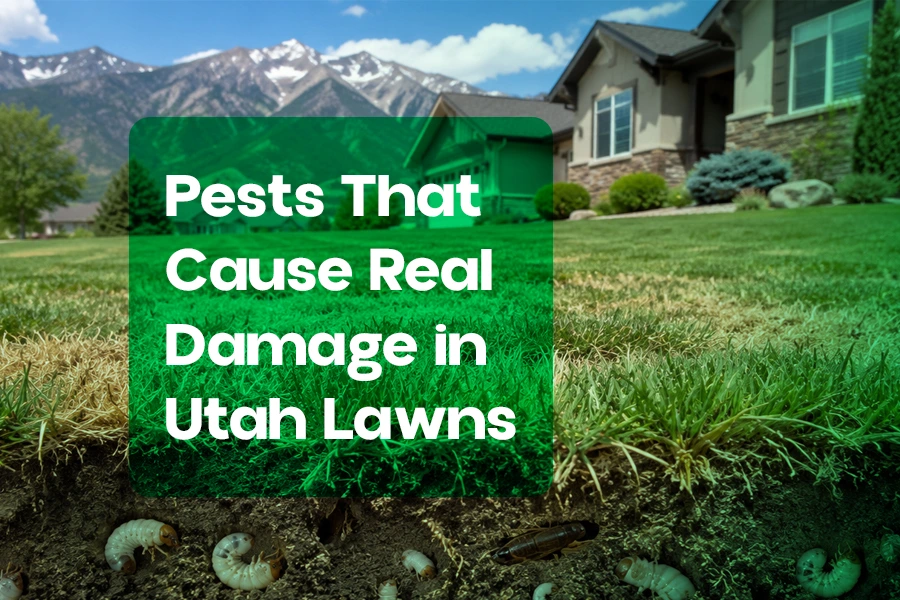
Not every bug in your yard is a problem. A lot of insects are neutral or even helpful. The ones below are the ones that actually cause structural damage to grass roots, blades, and soil, the kind that shows up as dead patches, spongy turf, or grass that pulls up like a loose carpet.
White Grubs
These are the larvae of beetles, Japanese beetles, masked chafers, and others, and they live in your soil eating grass roots. You won’t see them unless you dig. What you’ll see instead is brown patches that appear in late summer, grass that pulls back from the soil easily because the roots aren’t there anymore, and sometimes animals, skunks, raccoons, birds, digging at your lawn looking for them. That digging is its own layer of damage on top of what the grubs already did.
Utah State University Extension notes that white grub damage in Utah lawns tends to peak in late July through September, which is when populations are large enough to cause visible harm. Treating at the right point in the grub’s life cycle matters a lot, products applied after larvae are fully grown are much less effective.
Sod Webworms
These are the larvae of lawn moths, and they’re surface feeders, which means they eat grass blades instead of roots. The damage looks different from grubs, irregular brown patches, sometimes with visible silk tunneling near the soil line, and a lawn that looks scalped in spots even if you haven’t mowed low. Moths flying up from the grass when you walk across it in the evening is a common sign people mention right before they call us.
They’re most active in the warm months and tend to hit thin, stressed lawns harder than healthy, dense ones.
Chinch Bugs
Small, hard to see, and capable of killing large sections of lawn fast. Chinch bugs pierce individual grass blades and suck out the plant fluid, and they leave behind a substance that actually stops water from entering the plant. So the damage looks like drought stress at first, yellow patches, then brown, then dead. A lot of people water more, which doesn’t help, because the grass isn’t actually drought-stressed. It’s been poisoned at the cellular level.
They tend to show up in hot, dry spots first. Lawn edges near concrete or pavement, sunny slopes, areas that dry out fast in summer.
Billbugs
The larvae feed on grass stems just below the soil, and the adults chew on stems above it. The damage pattern looks similar to grubs, brown patches, grass that pulls up too easily, but the stem damage is the tell. Break off a dead grass stem and look at the base. If it’s hollow or has sawdust-like frass inside, billbugs are likely the culprit.
Armyworms
Not a year-round problem, but when they show up they show up fast. Armyworm larvae move in groups and can eat through large sections of lawn in a matter of days. The name comes from that migration behavior, they’ll strip one area and move to the next. Damage shows up as irregular, spreading dead patches, and the caterpillars are usually visible if you look in the early morning or evening.
Gophers and Voles
Technically not insects, but we’re including them because the calls about lawn damage from gophers and voles are constant, especially in neighborhoods that border open land or fields in Tooele County and Davis County. Gophers push up mounds of loose soil and eat plant roots underground. Voles create surface runways, shallow trails through the grass, often hidden under snow in winter and revealed in spring as dead grass channels running through the lawn.
Both cause damage that’s easy to misread as disease or drought, which is why proper identification matters so much before any treatment starts.
222Pest Damage vs. Disease vs. Drought: How to Tell the Difference
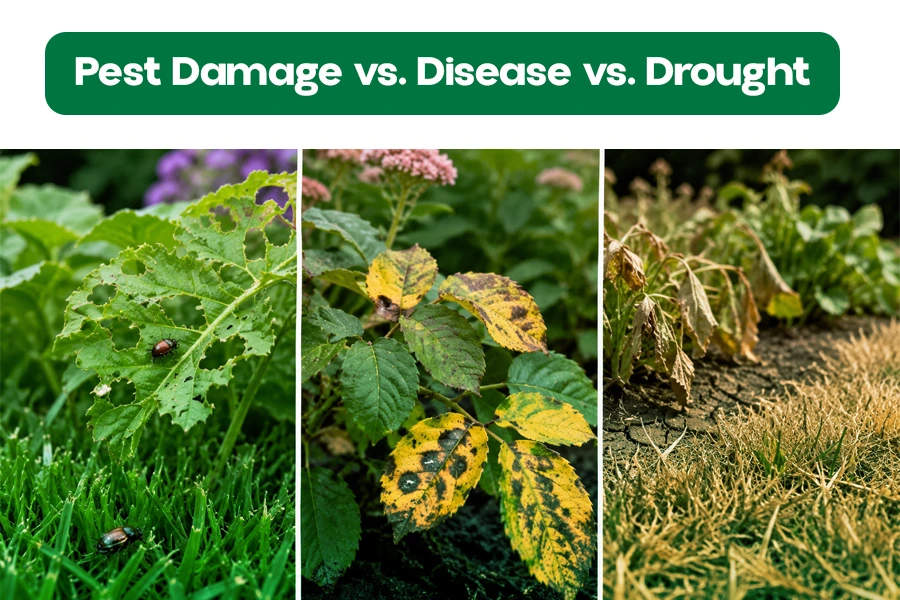
This is probably the most practically useful thing in this guide, because misreading the cause means whatever you do next probably won’t work.
If the damage has irregular edges that spread slowly, it’s more likely a fungal disease, dollar spot, brown patch, necrotic ring spot. Pest damage tends to be patchier and less geometric.
If you can pull dead grass up easily with no resistance, that’s a root problem, which usually means grubs or billbugs ate what was holding the grass down.
If the grass is dead but the roots look fine, surface-feeding insects like webworms or chinch bugs are the more likely cause.
If there are mounds, tunnels, or runways, you’re dealing with a burrowing pest, gopher, vole, possibly mole.
If dead patches are perfectly round or shaped like fairy rings, that’s almost always fungal, not pest-related.
If the damage started in one hot, dry corner and spread outward, chinch bugs often work exactly that way.
Still not sure? Dig a square foot of turf about three inches deep in a damaged area and actually count what you find. More than five to ten white grubs per square foot is generally considered a threshold worth treating, according to extension research from multiple university programs including Utah State University Extension.
Why Timing Is the Whole Game
Pest control on lawns isn’t just about the right product. It’s about when you apply it, which is tied directly to where the pest is in its life cycle at that moment.
Grub treatments work best when larvae are young and still near the soil surface, typically late June through August in Utah. Treating in September or October, when larvae have grown and moved deeper, is mostly wasted effort.
Sod webworm and armyworm treatments hit hardest when caterpillars are still small. Larger larvae are harder to kill and have already done more damage.
Preventive treatments for chinch bugs and billbugs work better than reactive ones, because by the time you’re seeing the damage, the population is already large.
This is the main reason people call us after their own treatments didn’t work. Not because the product was wrong exactly, but because the timing missed the window and the pest was past the vulnerable stage.
What to Look for in a Lawn Pest Control Company
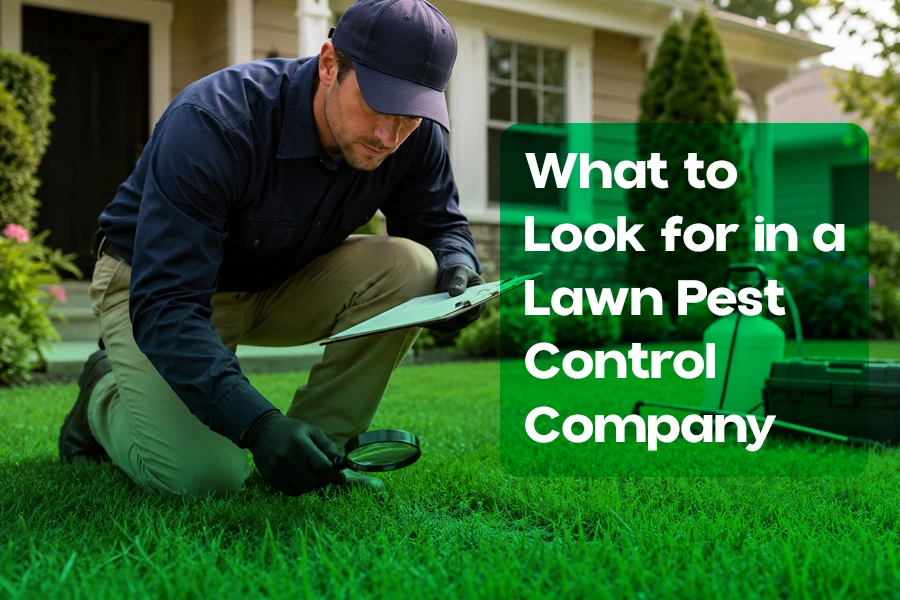
When you’re comparing companies that show up under “lawn pest control near me,” a few things actually matter.
They Start with Identification, Not a Product
A company that shows up and starts spraying without first telling you what pest you have is a red flag. Identification should happen before any treatment gets recommended. If someone gives you a quote before walking the lawn, that’s worth a second thought.
They Explain the Treatment Plan
You should know what’s being applied, why, and when follow-up is needed. Some pest problems need one treatment. Others, especially grubs, which have a specific life cycle, need two visits timed correctly. A trustworthy company explains this upfront.
They Hold Current Licensing
In Utah, applying restricted-use pesticides commercially requires licensing through the Utah Department of Agriculture and Food. Ask directly. Any legitimate operation answers this without hesitation.
They Use an IPM Approach
The EPA’s Integrated Pest Management framework calls for the most targeted, appropriate treatment for the specific pest, not the strongest thing available. Companies that follow IPM are usually thinking about your lawn’s long-term health, not just the current infestation.
They Know the Region
Pest pressure in Salt Lake County differs from Tooele County. Lawns near open fields or foothills deal with different problems than neighborhoods further into the valley. A company that’s worked in your specific area understands that and adjusts accordingly, rather than applying a one-size plan across every yard they visit.
What a Professional Lawn Pest Control Visit Looks Like
First visit usually starts with a full walkthrough. The technician looks at the damage pattern, checks soil, examines roots if needed, and identifies what’s causing the problem before recommending anything. That identification step matters more than most people realize.
After that, the treatment recommendation. Depending on what’s going on, it might be a soil-applied product for grubs, a surface treatment for webworms or chinch bugs, or a bait-based approach for gophers and voles. Most treatments include guidance on when kids and pets can go back on the lawn, follow that, it’s there for a reason.
Follow-up timing depends on the pest. Some problems are handled in one visit. Others, especially grubs and recurring surface feeders, need a second treatment timed to the pest’s next life stage to actually break the cycle.
A good company tracks what happened and adjusts the plan if something keeps showing up. Not every lawn responds the same way, and a rigid plan that never changes is usually one that stops working by mid-season.
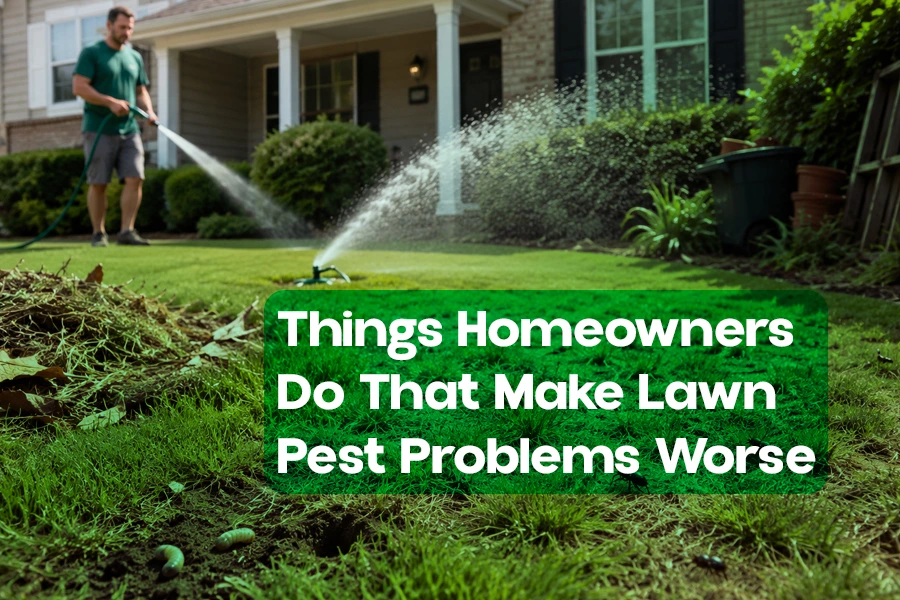
Things Homeowners Do That Make Lawn Pest Problems Worse
A few habits quietly undo whatever treatment just happened.
Watering right after a surface treatment gives a lot of products less contact time than they need. Most surface insecticides need to stay dry for a short period to work properly. Ask the technician when it’s okay to water.
On the flip side, some soil-applied products for grubs actually need to be watered in after application to move them into the root zone where grubs are feeding. Skipping that step reduces effectiveness significantly.
Mowing too short and too often stresses the lawn, and stressed lawns attract pest pressure. Thin, weak grass is easier for chinch bugs and webworms to damage than dense, healthy turf.
Overwatering invites a different set of problems, it keeps soil conditions that certain grubs and fungal diseases thrive in. Wet soil near the surface during summer is grub-friendly. Deep but infrequent watering is better for the grass and less hospitable to pests.
Lawn Habits That Reduce Pest Pressure Over Time
Professional treatment deals with what’s there now. Good lawn care habits reduce how often pests find an easy target in the first place.
Dense, well-fertilized grass is harder for surface pests to establish in. Roots that go deep, which comes from infrequent deep watering, are more resilient against grub damage than shallow-rooted grass. Thatch buildup over half an inch creates a layer that some pests like webworms and chinch bugs actually live and breed in, so dethatching periodically is worth doing.
Fixing bare or thin patches quickly matters too. Bare soil and stressed grass are the easiest entry points for almost any lawn pest. Reseeding thin areas and addressing whatever caused the thinning in the first place, compaction, shade, soil quality, makes the lawn less inviting overall.
Frequently Asked Questions
How do I know if I have grubs or just drought stress?
Try pulling up a section of brown grass. If the roots are gone and the turf lifts up easily, grubs are likely. If the roots are intact and the grass just pulls with some resistance, the problem might be drought, disease, or something on the surface instead.
Is lawn pest control safe for kids and pets?
When applied by a licensed technician following label guidelines, yes. You’ll be given a re-entry window, how long before kids and pets can go back on the lawn. Follow it. Most are a few hours.
Can I treat grubs myself?
Store-bought grub products exist, but timing is critical and some of the more effective options aren’t available without a license. If you’ve already tried once and the problem returned, that’s usually a timing or product mismatch that’s worth having a professional assess.
Do I need different treatment for different pests?
Yes. Grubs, webworms, chinch bugs, and gophers all require different products and approaches. That’s exactly why identification comes before any treatment recommendation.
How many visits does lawn pest control usually take?
Depends on the pest. Surface insects often need one well-timed visit. Grubs sometimes need two, a preventive and a curative, depending on where the population is in its cycle. Gophers and voles may need ongoing monitoring.
Will pest control also handle the weeds in my lawn?
Pest control and weed control are typically separate treatments. Some companies offer both. If you need both handled, ask whether they offer a combined seasonal plan.
How soon will I see results?
Surface treatments often show visible results within a few days as affected insects die off. Grub treatments that go into the soil may take longer, and the dead turf they left behind won’t recover on its own, you may need to reseed after the pest problem is under control.
What time of year is best for lawn pest control?
Depends on the pest, but most lawn pest issues in Utah are best addressed between late spring and early fall. Grub preventives go down in late spring to early summer. Surface pest treatments happen when populations are active in the warm months.
Getting the Right Help for Your Lawn
Searching “lawn pest control near me” gives you a list. Figuring out who on that list will actually walk your lawn, correctly identify what’s happening, and give you a treatment plan tied to your specific pest and your specific part of Utah, that’s the part that takes a few more questions.
Ask who does the identification. Ask what they’re applying and why. Ask whether their technicians are licensed through the state. A company that handles those questions without hesitation is usually one worth working with.
Lawn pest damage doesn’t fix itself, and it usually gets worse before it gets better if left alone. A single well-timed treatment from someone who knows what they’re looking at is worth more than three rounds of the wrong product from the hardware store.